

Letters and Lime Trees

4610f52bcd658Sandford-Avenue.jpg

Letters and Lime Trees

Jill Ming's research into the history of a former rectory led to her discovering a Victorian rector's gift to a Shropshire town

When the Reverend Holland Sandford took his gig the four miles from his home in rural Shropshire to the nearby town of Church Stretton one day in 1884, he mused over the town's recent acquisition of the sobriquet "Little Switzerland'.

Visitors were often heard to comment on the Alpine-like charm of the town's setting at the foot of the steep Long Mynd amongst the south Shropshire hills.

The railway station had been built on the edge of the town and the Reverend felt that the road into Stretton could be further enhanced by an avenue of trees which would also provide shade and shelter.

Having given the matter some thought, the rector returned home and took up his pen.

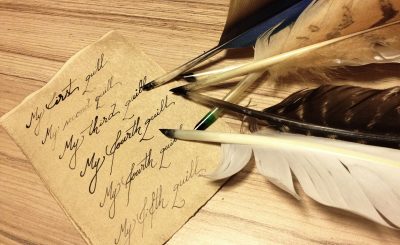
The Reverend Holland Sandford was a Shropshire man and a Cambridge graduate, an avid writer of letters, who kept up a more or less continuous correspondence with family, friends and acquaintances for many years. His surviving letters reveal fascinating glimpses into the life and personality of a Victorian clergyman.

Church Stretton

On this particular day, 27 October 1884, he wrote to the Church Stretton Post Master, George Windsor, proposing the idea of "improving the approaches to Stretton from the station by an avenue of lime trees or English elm' to be funded and organised by Sandford under the guidance of a committee chaired by him.

Two weeks later the first meeting was held at the Church Stretton Hotel when the committee unanimously accepted the Reverend Holland Sandford's kind gift of an avenue of lime trees.

What seemed, on the face of it, a more or less straightforward project grew to become a considerable undertaking which, with his other duties, took its toll on the Rector's health and, on occasions, taxed his patience to the limit.

4610f52bce213little-Switzerland.jpg

To begin with though, Sandford immersed himself in getting the project off the ground, writing letters, chairing committee meetings, purchasing the first set of trees and organising their planting.

The committee had to make some important decisions: what kind of trees should be purchased, where precisely should they be planted, how far apart, should they be fenced, and so on.

Objections

It also dealt with objections to the scheme. Of these Sandford commented in characteristic manner: "In any useful thing I take in hand,' he said, "I always expect the malicious opposition of knaves, and the silly obstructiveness of fools: what odds?'

Despite suffering from lumbago, Sandford travelled to Chester on 1 December with George Preece, a local nurseryman who had been commissioned to plant the trees, and "ordered 78 lime trees which are to be forwarded to Stretton tomorrow week 9th inst.'.

The committee arranged the planting ceremony for 19 December 1884 with a luncheon to follow and invited the Reverend Sandford as guest of honour.

4610f52bcedccsandford-avenue-sign.jpg

The planting ceremony was reported in great detail in the Shrewsbury Chronicle on 26 December 1884.

"As the time approached for the inaugural ceremony, the town became very animated from the great number of persons who had assembled to honour the occasion.'

The committee presented Holland Sandford with a ceremonial spade on which was painted "Sandford Avenue 1884' which the rector used to dig the initial turf.

Large crowds turned out to witness the event and there was much excitement, cheering and waving of flags as he planted the first tree.

It was proposed that a brass plaque be erected to record the planting of Sandford Avenue and "this was accepted with acclaim and a handsome collection made towards defraying its cost'.

The celebrations continued on into the evening when "the following effusion was read out':

The Sandford Avenue

Now, Gentlemen, tis something new
For me to have to sing to you
Upon the latest thing in view
"The Sandford Avenue'

Twill shade the weak from scorching sun
The children underneath will run
While visitors enjoy the fun
"The Sandford Avenue'

Oh may you all live long to see
Strettonians entertain with glee
The visitors who come to see
"The Sandford Avenue'

The next day Holland Sandford wrote to Mr Windsor saying "Everything so bright, so joyous, and successful, and to a very great extent owing to yourself: I cannot but feel extremely proud and grateful. PS Ask Mr Preece to take care of the spade and to send it to me on Tuesday.'

However four days later the committee had to be convened to discuss damage caused to six of the lime trees "by lubberly louts'. They notified the police, issued a reward of £5 and advertised in the local papers for information to catch the culprits, meanwhile the trees were treated and order restored.

The Sandford Avenue project was so successful that Holland Sandford decided to extend the planting across Watling Street and offered a further "64 lime trees to carry the avenue up to the top of Hazlar at 30 yards apart'.

This time he decided to seek sponsorship from eminent local people, each tree being numbered and associated with particular individuals. His letters secured many promises of support, one of which resulted in "Tree no. 12 in honour of HRH The Prince of Wales being planted on 11 March 1885'.

The plaque commemorating the planting of Sandford Avenue can be seen in Church Stretton today.

The magnificent avenue of lime trees marks the entrance to Stretton from the east and is a delightful reminder of the enterprise and generosity of this remarkable man.

Visit Buildings Beginings for further information about house history research. out.

VA:F [1.9.10_1130]
Rating: 10.0/10 (4 votes cast)
VA:F [1.9.10_1130]
Rating: 0 (from 2 votes)
Letters and Lime Trees, 10.0 out of 10 based on 4 ratings
Share